


The Eternal Bard and the Fire of Radicalism
- GHTN Admin
- May 9
- 3 min read
By Vinay Nalwa
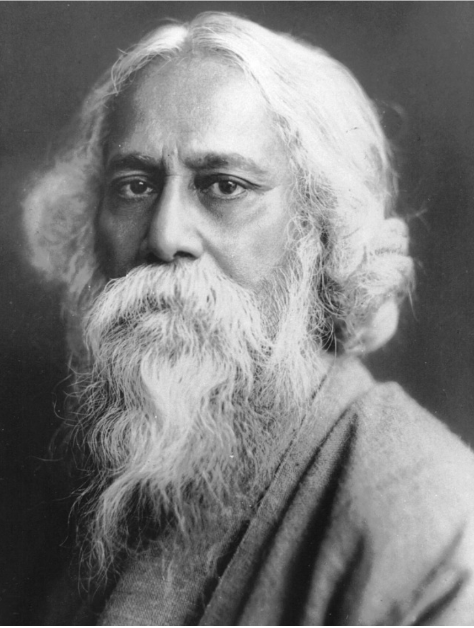
The month of Baishakh traditionally arrives with the fragrance of Rabindra Jayanti, a season when Bengal immerses itself in the lyrical and spiritual universe of Gurudev Rabindranath Tagore. Yet this birth anniversary carries a deeper ache. Less than a year ago, the world watched as a mob in Bangladesh vandalised Rabindra Kacharibari, the ancestral estate and sacred Karmabhumi where Tagore composed parts of Gitanjali and shaped his philosophical vision.
The destruction of his writing desk and the desecration of a place inseparable from Bengal’s cultural memory was not merely an act of vandalism. It was symbolic, an attempt to sever Bengali identity from the Hindu civilisational roots that nourished it for centuries. For Bengali Hindus today, Rabindra Jayanti cannot remain a ritual of songs alone. It must become a moment of Pratyavartana, a return to the Vedantic and Vaishnava foundations that made Tagore the voice of an eternal civilisation.
The Politics of Erasure
What occurred in Bangladesh was not an isolated outburst. It reflects a deeper and long standing effort to erase Hindu civilisational markers from the Bengali landscape. As Islamic radicalism grows stronger in sections of Bangladesh, Tagore increasingly appears inconvenient to those seeking to impose a narrow mono religious identity upon a historically plural and spiritually layered culture.
This hostility is not new. Attempts to diminish Tagore’s legacy date back to the 1960s, when sections of the Pakistani establishment viewed him as “too Hindu” for their ideological project. That same hostility has resurfaced with renewed aggression. By attacking the very soil where Tagore realised his Upanishadic vision, radicals are not merely targeting a poet; they are attacking the civilisational continuity of Bengal itself.
They understand something many modern commentators often ignore. Tagore’s worldview was inseparable from Hindu philosophical thought. His poetry, music, and philosophy emerged from the currents of Dharma, Bhakti, and the Upanishads. To erase that inheritance is to hollow out the Bengali spirit itself.
The Upanishadic Mind of Tagore
To understand Tagore is to understand the Upanishads. Modern discourse often presents him merely as a secular humanist detached from tradition, but such readings flatten the spiritual depth of his thought. Tagore’s philosophical framework was deeply rooted in ancient Indian wisdom.
He did not regard the world as an illusion to be rejected. Instead, he envisioned existence as a divine manifestation filled with meaning, beauty, and relationship. Scholars have often described his worldview as a form of “Concrete Monism”, the idea that the One expresses itself joyfully through the Many.
For Tagore, the Brahman of the Upanishads was not an abstract metaphysical principle removed from human experience. It was living, personal, and creative. He transformed the wisdom of Tat Tvam Asi into a spiritual philosophy centred on the dignity and sacredness of human existence, what he famously described as the “Religion of Man.”
The Vaishnava Soul of Bengal
If Tagore’s intellect was shaped by the Upanishads, his emotional and spiritual sensibility flowed through the Bhakti traditions of Bengal. He was profoundly influenced by Vaishnava poetry and by the devotional legacy of Chaitanya Mahaprabhu.
In Tagore’s songs and reflections, the Divine appears not as a distant force, but as Jivan Devata, the Lord of Life, an intimate companion, beloved, and eternal presence. He embraced the Vaishnava understanding of Lila, Divine Play, where the Infinite finds expression through the finite world in love, beauty, and devotion.
This synthesis of philosophical depth and emotional surrender became one of the defining features of Bengali Hindu civilisation. It is precisely this continuity that radical forces seek to dismantle, because it represents a cultural inheritance they cannot assimilate into exclusivist narratives.

Why Tagore Matters Today
The attack on Rabindra Kacharibari makes Tagore more relevant today than ever before. The vandalism was not only directed at a historical monument; it reflected contempt toward an entire civilisational memory rooted in Hindu thought and Bengali cultural identity.
Tagore’s message to modern Hindus remains one of rooted confidence. He taught that Dharma is not a fragile relic preserved behind glass. It is a living force sustained through creativity, devotion, and civilisational continuity.
As Bengal marks another Rabindra Jayanti, it must remember that Tagore’s songs are more than cultural performances; they are civilisational hymns. His philosophy remains a shield against cultural amnesia and spiritual uprootedness.
A mob may burn wood and desecrate buildings, but it cannot extinguish the Anandam, the spiritual joy that animated Tagore’s vision of life. To honour Gurudev today is not merely to remember a poet. It is to defend the civilisational continuity he embodied, a continuity that survives even when the structures housing it are reduced to ruins.



Comments