


University of California, Berkeley Proclaims Hindu Heritage Month
- Oddball Comics
- Dec 19, 2025
- 3 min read

CoHNA Youth Action Network and Hindu Yuva Succeed in Advocacy on Campus
By Amitabh Sharma
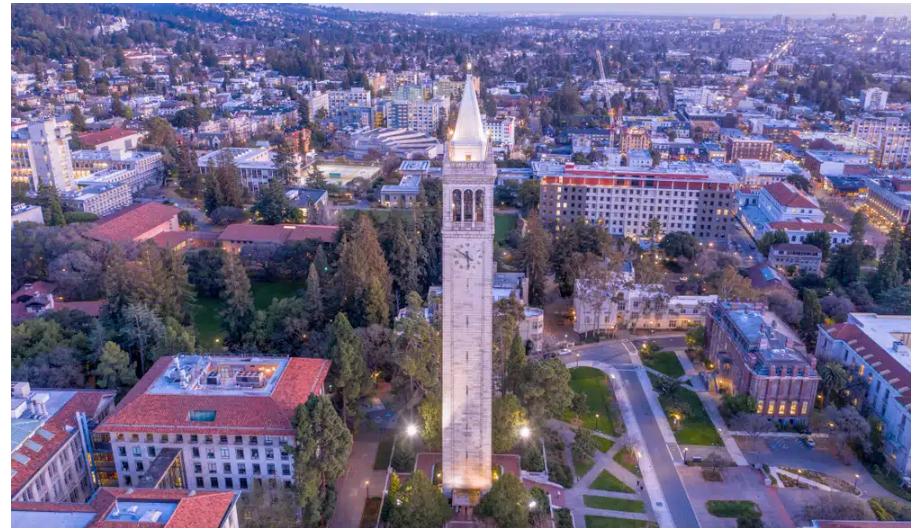
CoHNA Youth Action Network (CYAN) and Hindu Yuva, two organizations led by Hindu youth on university campuses in America, have achieved a milestone in getting the University of California, Berkeley to proclaim October as Hindu Heritage Month.
This achievement is particularly significant in the backdrop of persistent and rising Hinduphobia on college campuses in the United States of America. “Dismantling Global Hindutva” in September 2021, in which more than fifty universities participated, and “Hindutva in America: A Threat to Equality and Religious Pluralism” at Rutgers University in 2025 are just two examples of the spread of hostility toward Hindus by a coalition of Islamist, Marxist, and Evangelical forces masquerading as academics and civil society organizations.
The welcome move by the University of California, Berkeley should become a prelude to other universities across the United States emulating it. It proves that persevering youth can be—and indeed are—the driving force in standing up for Hindu dharma. Aryan Sawant and Arya Kulkarni deserve a standing ovation for this dedicated effort. (https://www.youtube.com/watch?v=RQhBrBttOZk)
Hinduphobia is real. It manifests through temple vandalism and desecration, stereotyping and misinformation on campuses, erasure or distortion of Hindu history and philosophy, and the demonization or silencing of Hindu voices under the guise of “acceptable prejudice.” This is not a political issue; it is a matter of civil rights, cultural dignity, and religious freedom.
A host of civil society efforts are underway, yet one of the most impactful avenues taking root is awareness-building within university campuses. A well-orchestrated strategy is gradually emerging, with goals encompassing education, visibility, legitimacy, and protection. Student engagement encourages forming and strengthening Hindu Student Alliances and Associations, training student ambassadors to speak factually and confidently, and mobilising peaceful, intellectual activism through panels, debates, lectures, and discussions.

This momentum is further reinforced by creating academic legitimacy—hosting faculty-led seminars on Hindu contributions to mathematics, philosophy, ecology, yoga, ethics, and related disciplines; demanding accurate curriculum representation; and countering misinformation with substantive citations rather than slogans. A positive trend is now visible in both action and impact. Hindu Heritage Month is being proclaimed across campuses and city councils, while cultural engagement is expanding through open houses, temple visits, festivals, art exchanges, film screenings, and moderated discussions.
A values-driven and principled youth leadership—deliberately not anger-driven—has begun to emerge, demonstrating knowledge over noise, compassion over confrontation, and unity over fragmentation. There is a growing resolve among students to say, calmly yet firmly: “We will not be silent when our faith is mocked, our temples attacked, or our history erased.”
Advocacy and proclamations for Hindu Heritage Month convey clear messages to institutions and governments alike: that Hindus belong to one of the world’s oldest living civilizations; that Hinduism upholds pluralism, non-violence, and coexistence; and that recognition is about education, not privilege. The path forward involves framing the issue with clarity and credibility, drafting formal resolutions, gathering interfaith endorsements, engaging city councils, school boards, and universities, and highlighting Hindu contributions to society, science, and culture.
At this stage, sustained progress depends equally on broader community participation. Community-wide support remains essential to strengthen youth efforts. Participation from temples and spiritual institutions—by becoming centres for civic engagement and education, offering leadership workshops and media training, and supporting students legally, emotionally, and financially—can play a decisive role in expanding Hindu Heritage recognition nationwide. Professionals and elders can further accelerate momentum: attorneys addressing vandalism and hate crimes, academics publishing and speaking to correct narratives, and media professionals proactively countering bias.
Hindu mandirs, in particular, hold a vital responsibility in showcasing the eternal values of Sanatan Dharma to wider society. Another meaningful avenue for recognition lies in creating enduring physical spaces that narrate Hindu civilisation and its historical experiences—much like Holocaust museums—fostering interfaith solidarity and building alliances with Jewish, Christian, Sikh, and Buddhist communities. Such efforts can sensitise diverse societies while grounding younger generations in an authentic understanding of Hindu history and heritage.
Taken together, these efforts reflect not a momentary reaction, but the steady emergence of a confident, informed, and values-driven Hindu youth voice.
“When young voices choose knowledge over fear and clarity over silence, heritage becomes not a memory, but a responsibility carried forward.”
We seek not dominance, but dignity. Not confrontation, but correct understanding. Not isolation, but inclusive coexistence.
(The writer is a Member of, Board of Directors, Global Hindu Temple Network America)

Comments